
What is the Rice Export Procedure from India? A Complete Step-by-Step Guide
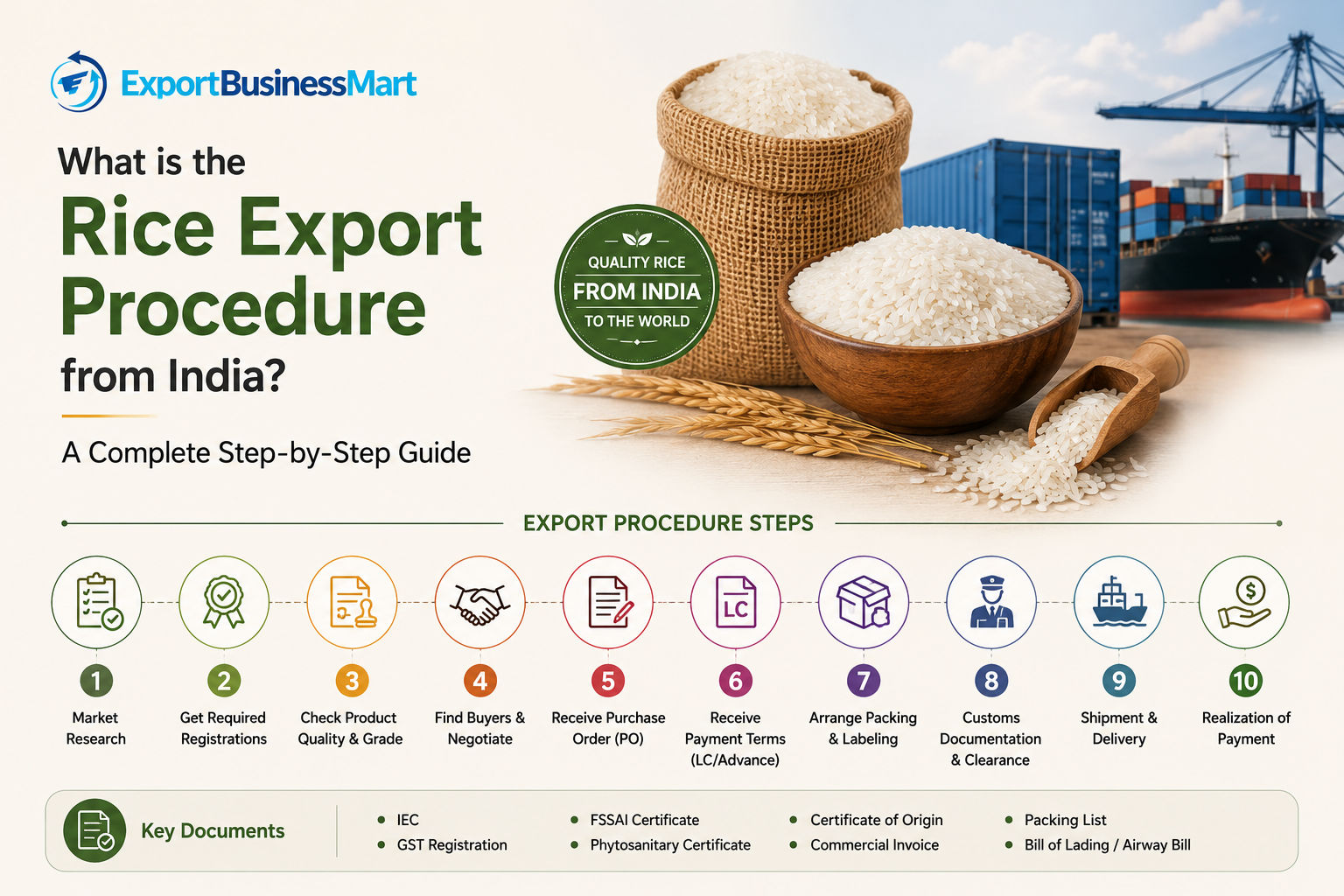
What is the Rice Export Procedure from India? A Complete Step-by-Step Guide
India is one of the biggest rice producers and exporters in world that offers varieties like Basmati and Non-Basmati to Asia, Europe, Middle East, Africa & North America. The rise in global demand has led to many entrepreneurs and businesses wanting to enter the rice export business. However, details of Rice export procedure from India are important to maintain the flow and government rules.
In this guide, we will talk about the process you should follow in order to how to export rice from India such as documentation required to export rice from India, registration for exporting rice and all other key steps you need to follow while exporting rice to every other country.
Why Export Rice from India?
For the past years, India has become a big name in rice commodity market due to its best quality, pricing and large production capacity. Having an excellent climate together with modernized agriculture, this country is among the top exporters of rice in the world.
Rice has a solid demand across the world throughout the business cycle, which makes it a great export commodity. In order to establish a true rice export business from India, it is crucial not just to have information about Basmati or Non-Basmati rice but also every step involved in the Rice export procedure from India.
Rice Export Procedure from India (Step by Step Process)
Here are the steps you need to take if you wish to export rice:
1. Register Your Business
Step one: to officially register your company. You can function as a Proprietorship, Partnership, LLP or Private Limited Company based on your business needs.
2. Get an Import Export Code (IEC)
All export business in India would require an Import Export Code (IEC) from the Directorate General of Foreign Trade (DGFT). Without IEC, no rice can be legally exported to international consumers.
3. Complete APEDA Registration
Registration is compulsory for rice exporters with the Agricultural and Processed Food Products Export Development Authority (APEDA). Import and Registration of Import/Export Goods This registration facilitates exporters to meet the export standards and avail multiple benefits under other schemes related to export promotion.
4. Find International Buyers
Make the registrations you need and begin looking for potential repeat buyers from overseas. B2B Marketplaces, trade fairs, export promotion councils and business networking platforms can help you to find real importers.
Understanding how to export rice from India to other countries also involves identifying the target market, studying import regulations and negotiating export contracts carefully.
5. Finalize Product Quality and Packaging
International buyers demand high-quality rice, with appropriate grading and moisture standards. Make sure your product is qualified to enter the importing country.
Important- exporters should use best quality packaging through which the rice is protected from physical hazards that might occur during transport as well as it should carry product details, true weight, country of origin and labeling detail.
6. Arrange Shipping and Customs Clearance
Hire an experienced freight forwarder to handle shipping logistics. Clear the goods through customs and submit necessary documents with sea or air freight booking on buyer demand.
Correct Rice export procedure from India avoids unnecessary delays and helps in timely delivery.
Documents Needed To Export Rice from India
Creating precise documentation is one of the most critical elements of export. Documents required for rice export from India. The following are the documents typically required:
- Import Export Code (IEC)
- APEDA Registration Certificate
- Commercial Invoice
- Packing List
- Purchase Order or Sales Contract
- Bill of Lading or Airway Bill
- Certificate of Origin
- Phytosanitary Certificate (if required)
- Shipping Bill
- Insurance Certificate (where applicable)
These should be ready beforehand to ensure that customs clearance is hassle-free and shipments international run smooth.
HSN Code for Export of Rice from India
HSN Code — Harmonized System of Nomenclature (Harmonized Coding System) is the global classification of goods for cross border trade and customs expediency. In the rice export procedure from India, exporters have to rightly mention HSN code in invoices, Shipping bills and other export documents for customs clearance without any error.
HSN Code Here are few examples of HSN Codes for rice export:
- 1006 — Rice (General category)
- 1006 2000- Golden Brown (Husked) Rice
- 10063090– Semi-Milled or Wholly Milled Rice
- 10064000 – Broken Rice
- 10063010: Parboiled Rice
- 10063020: Basmati Rice
Correct HSN Code will expect no miscalculation from the customs department for export orders as well. Before shipment, exporters also need to check with customs authorities or their customs broker regarding the applicable code because product specifications may impact classification.
Important States in Rice Production- in India
India is one of the largest producing countries and several states contribute to domestic production as well as exports. The foundation for the Rice export procedure from India would be a robust agricultural base, ensuring a consistent supply of high quality rice to international markets. Major rice producing states in India are:
Major rice producing states in India are:
Of these, the Punjab and Haryana states are known throughout the world for producing Basmati rice of premium quality whereas West Bengal, Uttar Pradesh, Andhra Pradesh, Telangana and Chhattisgarh are top growers of Non Basmati rice.
Exporters can avail better availability, competitive pricing and uniform quality of Rice with sourcing from these states. When it comes to learning how to export rice from India, understanding the production regions aids businesses in identifying reliable suppliers which is one of the important factors when it comes to successful exports.
Best Countries to Export Rice from India
India is the second largest exporter of rice in the world, exporting to over 150 countries. The increasing popularity of Indian Basmati and Non-Basmati rice has opened up awesome opportunities for exporters to grow on the international stage. Domestic and International markets different countries have different laws for import, rice quality standards and documentation required to export/import rice; you need to choose a target market you want to enter while learning the rice export procedure from India.
Top importing countries of rice from India are:
Exporters must always check into food safety standards, packaging requirements and customs requirement of the destination country before dispatching products. India is one of the biggest exporters and if a business wants to export rice or any other product from India to other countries, knowing how to export rice from India to other countries is avoids delays and helps in establishing long term relations with international buyers.
How to Export Rice from India Successfully
The frequent question from the new exporters is — how to export rice from India without prior experience. Coming down to the answer, proper planning and compliance.
Your export market there are four steps to follow in order to gain access into a profitable export market — know your buyers, your products and how you can compete on price. Collaboration with loyal logistic service providers and the guidelines from the government authorities will help you to make your export higher at least.
So, if you are thinking of how to export rice from India to other countries, bear in mind that things like import rules, quality certifications and packaging standards can vary from one destination to the other. Before dispatching your shipment, always check these requirements.
Common Challenges in Rice Export
While rice export provides a fabulous opportunity, it carries threats as well like the changing international rules and regulations, variations in freight costs, currency fluctuations and stringent quality checks.
These hurdles can be resolved effectively by staying updated with export policies, ensuring uniform quality of the product and building a long term business relationship with overseas buyers.
Do You Want To Export Rice? Start Exporting — Register Today on Exportbusinessmart.com
Registered Free NowFrequently Asked Questions (FAQs)
1. What is the rice export procedure from India?
The India rice exporting process involves: Business registration, Import Export Code (IEC), apeda registration, foreign buyers, export documentation, custom clearance & shipment.
2. How to export rice from India?
Registration of your business, IEC, APEDA registration to import or export rice from India after finding overseas buyers sitting with arranged documentation and arranging international shipping
3. What are the documents required for export of rice from India?
Needed to start the Rice Export from India IEC, Apeda registration, Commercial Invoice, Packing List, Shipping Bill, Bill of Lading, Certificate of Origin, Phytosanitary Certificate (if applicable).
4. What is the HSN Code for rice export from India?
The primary HSN Code for rice export from India is 1006. Depending on the type of rice being exported, sub-categories such as 10062000 (Brown Rice), 10063000 (Semi-Milled or Wholly Milled Rice), 10064000 (Broken Rice), 10063010 Parboiled rice and 10063020 (Basmati rice) may apply.
5. Which are the major rice producing states in India?
Some of the major rice producing states in India are West Bengal, Uttar Pradesh, Punjab, Haryana, Andhra Pradesh, Telangana, Chhattisgarh, Odisha, Bihar, Tamil Nadu, Assam and Karnataka. These states contribute significantly to India's rice production and exports.
6. Do rice exporters need to register with APEDA?
Yes. Any business or trader which plans to export rice and any other scheduled agricultural products from India is generally required to registration under APEDA.
Conclusion
When you have knowledge about registration, documentation, sourcing the buyers, quality standard and shipping requirements – The complete Rice export procedure from India looks very smooth and simple. Regardless of your stature be it a new entrepreneur or an established business, following the right export process keeps you legal and maximizes your chances of success in international markets.
This is a good option if you do want to make your export business larger, build relationships with trustworthy buyers and ensure that all legal formalities are fulfilled (paying both Indian and foreign taxes). If done correctly, rice export business in India can turn to be a good long-term business option.