
Why HSN Codes Are Important for Exporters and Importers
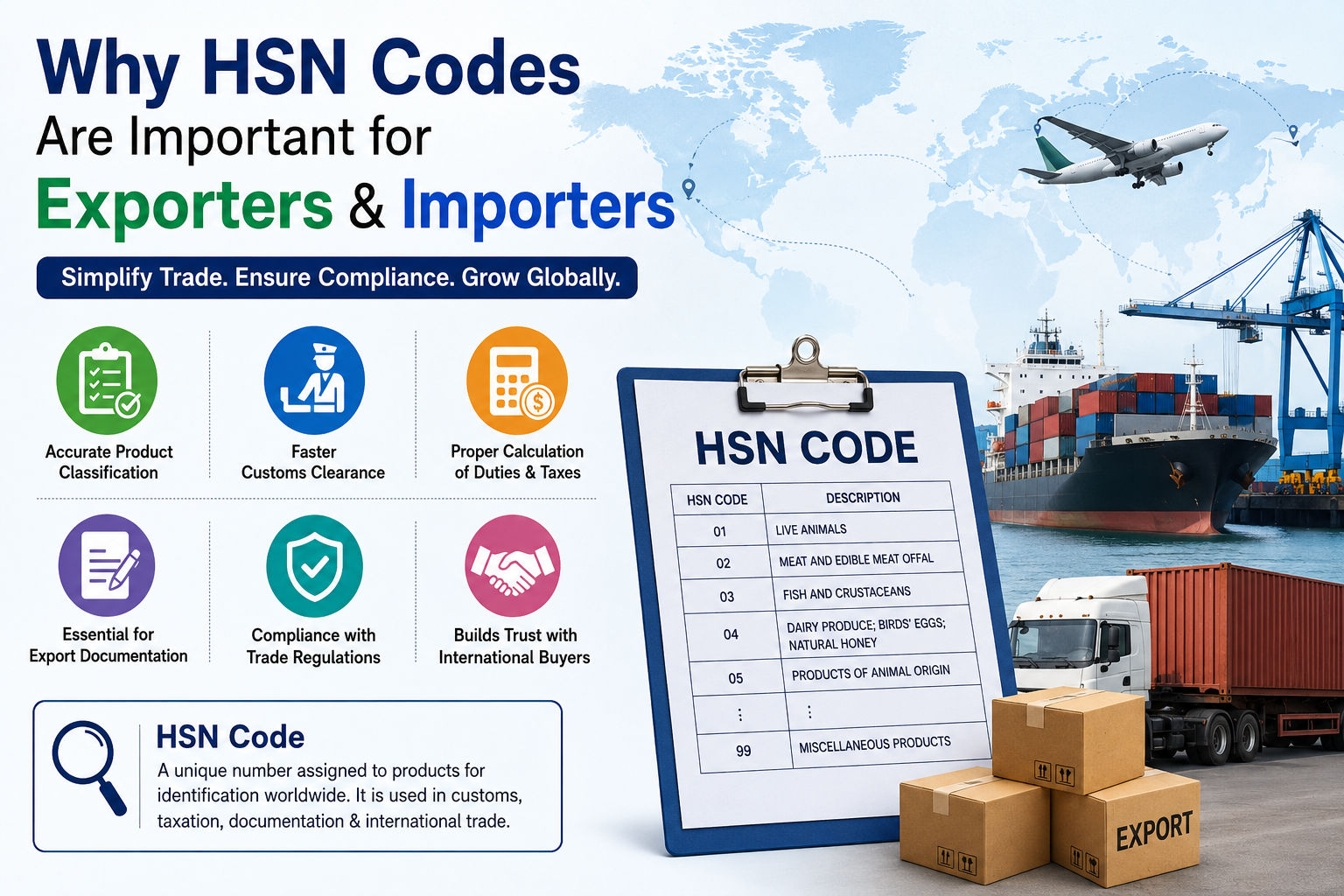
When people start an export business, they usually focus on finding buyers, arranging shipments, and managing export documents. However, one important detail that many businesses overlook is the HSN Code. A wrong HSN Code can create problems during customs clearance, affect tax calculations, and even delay shipments. That is why understanding HSN Codes is essential for every exporter and importer involved in international trade.
Whether you are exporting agricultural products, spices, food items, textiles, machinery, or industrial goods, using the correct HSN Code helps ensure smooth business operations and compliance with international trade regulations.
What is an HSN Code?
HSN stands for Harmonized System of Nomenclature. It is a globally accepted product classification system developed by the World Customs Organization (WCO). The purpose of the HSN Code is to classify products using a standardized numerical system that is recognized worldwide.
Today, more than 200 countries use HSN Codes to identify products traded across international borders. In India, HSN Codes are also used for GST compliance, taxation, export documentation, and customs procedures.
Simply put, an HSN Code acts as a universal language for products, making it easier for exporters, importers, customs authorities, and buyers to identify goods accurately.
Why HSN Codes Are Important in Export Business
Accurate Product Classification
Every product traded internationally must be classified correctly. Since thousands of products are bought and sold across global markets, a standardized classification system is necessary.
The correct HSN Code helps exporters and importers identify products accurately and maintain consistency across invoices, shipping documents, customs declarations, and trade records. Proper product classification reduces confusion and prevents costly mistakes during international transactions.
Faster Customs Clearance
Many exporters face shipment delays simply because the wrong HSN Code was mentioned in their documents. Customs authorities use these codes to identify products and determine applicable duties, regulations, and compliance requirements.
When the correct HSN Code for export products is used, customs officers can process shipments more efficiently. This reduces the chances of inspections, document queries, and unnecessary delays, helping businesses move goods across borders without interruptions.
Proper Tax and Duty Calculation
Import duties, GST rates, and other taxes are often linked directly to product classification. An incorrect HSN Code may result in wrong tax calculations, which can create financial losses and compliance issues.
Using the correct HSN Code helps exporters and importers calculate duties accurately and avoid unnecessary disputes with customs or tax authorities. It also improves financial planning and cost estimation for international shipments.
Essential for Export Documentation
Export documentation is one of the most important aspects of international trade. Documents such as commercial invoices, packing lists, shipping bills, certificates of origin, and customs declarations often require HSN Codes.
When businesses use the same HSN Code consistently across all documents, the risk of documentation errors is significantly reduced. Accurate export documentation helps ensure smoother trade transactions and faster processing.
Compliance with International Trade Regulations
Governments and customs departments use HSN Codes to monitor trade activities and maintain import-export records. Businesses that use accurate HSN Codes remain compliant with local and international trade regulations.
Staying compliant not only helps avoid penalties but also improves credibility with customs authorities and trade partners.
Builds Trust with International Buyers
International buyers often ask for complete product details before placing orders. Sharing the correct HSN Code helps buyers verify product classifications, import requirements, and applicable duties in their country.
This creates confidence and makes business communication more professional. Buyers prefer working with suppliers who provide accurate information and demonstrate a clear understanding of international trade requirements.
How to Find the Correct HSN Code
Finding the correct HSN Code is an important step for every exporter and importer. Businesses should carefully review product descriptions, official HSN Code Lists, GST resources, and customs classification guidelines before selecting a code.
Maintaining an updated HSN Code List can help businesses ensure consistency across documents and avoid classification errors. If there is any uncertainty, consulting a customs expert or trade professional can help prevent costly mistakes.
Popular Export Products and Their HSN Codes
Some of the most commonly searched export products include:
- Rice HSN Code
- Basmati Rice HSN Code
- Red Onion HSN Code
- Fresh Garlic HSN Code
- Turmeric HSN Code
- Red Chilli HSN Code
- Cumin Seeds HSN Code
- Wheat HSN Code
- Sugar HSN Code
- Tea HSN Code
Before exporting any product, businesses should always verify the latest HSN Code to ensure compliance with current regulations and international trade standards.
Common Mistakes Exporters Should Avoid
Many exporters and importers face problems because they do not verify product classifications properly. Some of the most common mistakes include:
- Using outdated HSN Codes.
- Selecting a code without proper verification.
- Using different HSN Codes across multiple documents.
- Assuming similar products have the same classification.
- Ignoring updates in trade regulations.
Avoiding these mistakes can save time, reduce costs, and improve overall export efficiency.
Frequently Asked Questions
Is an HSN Code mandatory for export?
Yes. HSN Codes are commonly required for export documentation, customs declarations, taxation purposes, and international trade compliance.
Can the wrong HSN Code delay exports?
Yes. An incorrect HSN Code can lead to customs inspections, shipment delays, document verification issues, and penalties.
Why do international buyers ask for HSN Codes?
Buyers use HSN Codes to identify products, understand import requirements, and determine applicable duties in their country.
How can exporters find the correct HSN Code?
Exporters can refer to official GST resources, customs databases, HSN Code Lists, and trade experts to identify the correct product classification.
Conclusion
In international trade, small mistakes can lead to costly delays. Choosing the correct HSN Code may seem like a minor task, but it plays a major role in customs clearance, taxation, export documentation, and regulatory compliance. Whether you are exporting rice, spices, onions, tea, textiles, or industrial products, understanding HSN Codes can help your business operate more smoothly and avoid unnecessary challenges.
For exporters and importers, accurate product classification is not just about following regulations—it is about building trust, improving efficiency, and ensuring long-term success in global markets. Businesses that understand how to find HSN Codes and maintain an accurate HSN Code List are better prepared to compete in today's international trade environment.