
What is the Difference Between a Port and Terminal?
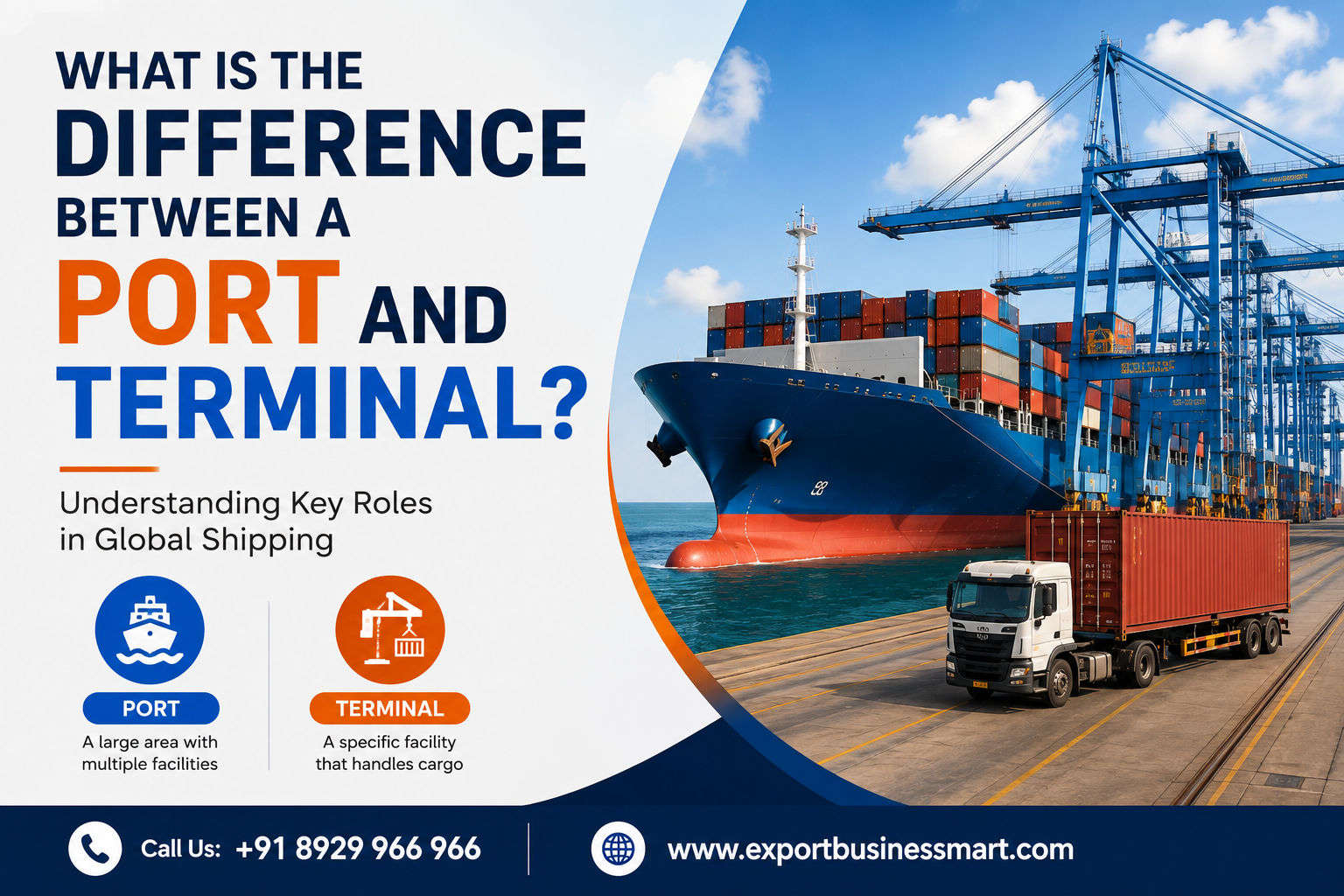
What is the Difference Between a Port and Terminal? Complete Guide for Global Trade
Global trade depends on efficient logistics, and two terms that are often used interchangeably are port and terminal. While they are closely connected, they are not the same. Understanding the difference between a port and terminal is essential for exporters, importers, freight forwarders, and logistics professionals.
Many businesses assume that a port and a terminal refer to the same place. However, knowing the difference between a port and terminal can help avoid confusion, improve shipping efficiency, and simplify communication with logistics partners.
In this guide, we'll explain the difference between a port and terminal, how each works, and why both are crucial for international shipping.
What is a Port?
A port is a large maritime facility where ships arrive, dock, load cargo, unload goods, and depart for international or domestic destinations. Ports are generally managed by government authorities or port authorities and serve as major gateways for global trade.
A port includes multiple facilities such as:
- Cargo terminals
- Container yards
- Warehouses
- Customs offices
- Security checkpoints
- Road and rail connectivity
- Administrative buildings
Simply put, a port is the complete shipping hub that handles different types of cargo and transportation activities.
What is a Terminal?
A terminal is a specific operational area located inside a port. It is designed to handle a particular type of cargo or shipping activity.
Depending on the cargo, terminals may include:
- Container terminals
- Bulk cargo terminals
- Oil terminals
- LNG terminals
- Ro-Ro (Roll-on/Roll-off) terminals
- Passenger terminals
Each terminal has specialized equipment, trained personnel, and infrastructure to efficiently manage its assigned cargo type.
What is Difference Between a Port and Terminal?
The easiest way to understand the difference between a port and terminal is to think of a port as an airport and a terminal as one building inside that airport.
| Port | Terminal |
|---|---|
| A complete maritime facility | A specific section inside a port |
| Contains multiple terminals | Handles a particular cargo type |
| Managed by port authorities | Managed by terminal operators |
| Includes customs, warehouses, roads, rail links | Includes cranes, loading equipment, storage yards |
| Serves many shipping operations | Focuses on cargo handling |
This comparison clearly explains the difference between a port and terminal for businesses involved in shipping.
How Does a Port Work?
A port functions as the central hub for maritime transportation.
Its primary responsibilities include:
- Receiving incoming vessels
- Providing docking facilities
- Customs clearance
- Cargo inspection
- Warehousing
- Connecting cargo to road, rail, and inland transportation
- Managing multiple terminals
Without ports, international trade would become slow and inefficient.
How Does a Terminal Work?
A terminal focuses only on cargo handling operations.
Its responsibilities include:
- Loading containers onto ships
- Unloading imported cargo
- Storing containers
- Operating cranes and heavy equipment
- Managing container movements
- Preparing cargo for onward transportation
Unlike the port, a terminal does not manage customs or overall port administration.
Why Understanding the Difference Between a Port and Terminal Matters?
Knowing the difference between a port and terminal offers several advantages for exporters and importers.
Better Shipping Planning
Businesses can accurately identify cargo destinations and pickup points.
Improved Communication
Using the correct logistics terminology reduces misunderstandings with shipping lines and freight forwarders.
Faster Documentation
Shipping documents often require terminal-specific information rather than just the port name.
Efficient Cargo Tracking
Containers move through terminals inside ports, making shipment tracking easier when the correct terminal is known.
Reduced Delays
Understanding logistics operations helps avoid mistakes during cargo handling and delivery.
Types of Port Terminals
Modern ports usually have several specialized terminals.
Container Terminal
Handles shipping containers used in international trade.
Bulk Cargo Terminal
Deals with commodities like coal, cement, grain, and fertilizers.
Liquid Cargo Terminal
Handles petroleum products, chemicals, and edible oils.
Ro-Ro Terminal
Used for cars, trucks, buses, and heavy machinery that can be driven directly onto ships.
Passenger Terminal
Serves cruise ships and ferry passengers.
Each terminal is designed to maximize efficiency for a specific cargo type.
Frequently Asked Questions (FAQs)
-
What is the main difference between a port and terminal?
A port is the entire maritime facility, while a terminal is a specific operational area within the port that handles a particular type of cargo.
-
Can one port have multiple terminals?
Yes. Most major international ports have multiple terminals, each designed for containers, bulk cargo, liquid cargo, vehicles, or passengers.
-
Who manages a terminal?
Terminals are usually operated by private companies or specialized terminal operators under agreements with the port authority.
-
Do ships dock at a port or a terminal?
Ships physically dock at a terminal, which is located inside the port.
-
Why is it important to know the difference between a port and terminal?
Understanding the difference between a port and terminal helps businesses improve shipping accuracy, avoid documentation errors, communicate effectively with logistics partners, and ensure smooth cargo movement.
Conclusion
Understanding the difference between a port and a terminal is essential for smooth international trade. A port is the overall maritime hub, while a terminal is a specialized facility within the port for handling specific cargo. Knowing this distinction improves communication, simplifies shipping processes, and helps businesses manage global logistics more efficiently.
Do You Want More Information? Start Exporting — Register Today on Exportbusinessmart.com
Registered Free Now